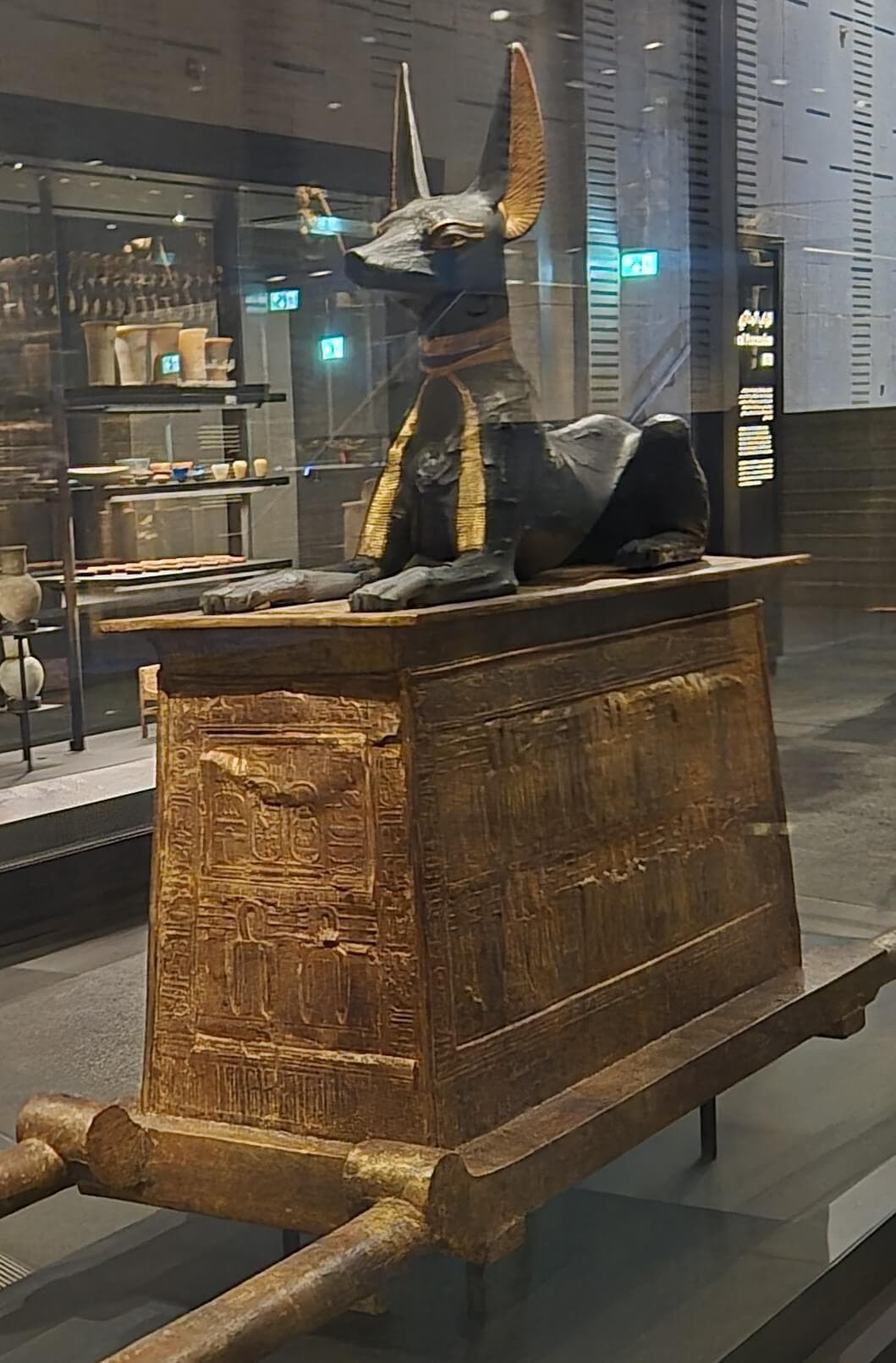
The artifact known as Anubis on a Chest is one of the most iconic objects discovered in the tomb of Tutankhamun, the young ruler of Egypt who lived during the 18th Dynasty of the New Kingdom around 1332 to 1323 BCE. This remarkable statue was discovered in 1922 by the British archaeologist Howard Carter in the Valley of the Kings.
The statue represents the god Anubis in the form of a reclining black jackal. Anubis was one of the most important funerary deities in ancient Egyptian religion. He was closely associated with mummification, embalming rituals, and the protection of tombs. In Egyptian belief Anubis guided the deceased through the dangerous journey into the afterlife and oversaw the sacred process of preserving the body.
The statue is positioned on top of a gilded wooden shrine chest that once contained ritual equipment used during the burial ceremony. The chest and the statue together formed a powerful symbol of divine protection. The jackal figure appears alert and watchful, as if guarding the sacred contents of the chest and protecting the king’s burial chamber from spiritual threats.
The black color of the jackal carries important symbolic meaning in ancient Egyptian culture. Although jackals were associated with cemeteries and desert burial grounds, the color black itself symbolized regeneration and rebirth. It also represented the fertile soil of the Nile River, which renewed Egypt’s land every year. For this reason the color black was linked with the promise of eternal life.
The statue was originally wrapped in linen when it was discovered. The linen covering had an inscription dating to Year 7 of the reign of Akhenaten, Tutankhamun’s predecessor. This detail suggests that some of the objects placed in Tutankhamun’s tomb were originally produced during earlier royal reigns and later reused for the young king’s burial.
The eyes of the jackal are made from obsidian and other precious materials, giving the statue a lifelike and intense expression. The craftsmanship demonstrates the high level of artistic skill achieved by ancient Egyptian artisans during the New Kingdom.
Placed near the entrance to the treasury chamber of the tomb, this statue acted as a supernatural guardian of the king’s treasures and sacred burial objects. For the ancient Egyptians, protecting the body and burial goods of the deceased king was essential for ensuring his successful transformation into an eternal divine being.
More than three thousand years later, the statue of Anubis still appears vigilant and powerful. It stands as a symbol of the ancient Egyptian belief that divine forces watched over the dead and protected their journey into eternity.The artifact known as Anubis on a Chest is one of the most iconic objects discovered in the tomb of Tutankhamun, the young ruler of Egypt who lived during the 18th Dynasty of the New Kingdom around 1332 to 1323 BCE. This remarkable statue was discovered in 1922 by the British archaeologist Howard Carter in the Valley of the Kings.
The statue represents the god Anubis in the form of a reclining black jackal. Anubis was one of the most important funerary deities in ancient Egyptian religion. He was closely associated with mummification, embalming rituals, and the protection of tombs. In Egyptian belief Anubis guided the deceased through the dangerous journey into the afterlife and oversaw the sacred process of preserving the body.
The statue is positioned on top of a gilded wooden shrine chest that once contained ritual equipment used during the burial ceremony. The chest and the statue together formed a powerful symbol of divine protection. The jackal figure appears alert and watchful, as if guarding the sacred contents of the chest and protecting the king’s ... Discover more with Premium!
Unlock the Full Story of This ArtifactUpgrade to premium to access the complete description, audio guides, and exclusive content for all artifacts.Access full audio guides, detailed descriptions, and voice tour assistant for the GEM's main artifacts for only $3.99