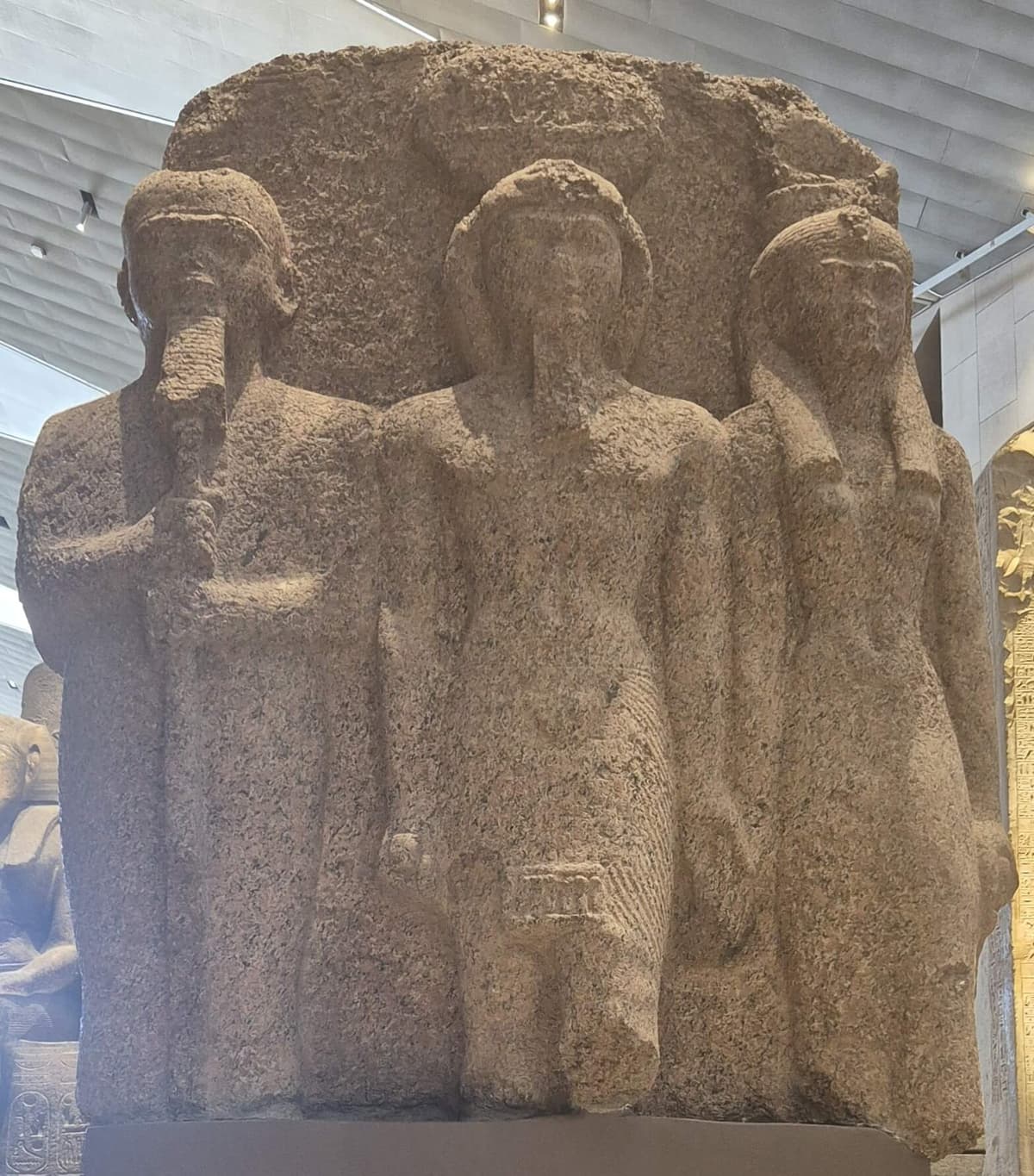
Before you stands a remarkable statue representing King Ramesses II alongside the god Ptah and a goddess, likely Bastet. This sculpture was unearthed in 2013 in Tell Basta (ancient Bubastis), an important center for the worship of the feline goddess Bastet during the New Kingdom period.
Ramesses II, who reigned for nearly 67 years (1279–1213 BCE), was one of Egypt’s most powerful and enduring pharaohs. His image appears across Egypt on temples, statues, and monuments, but this particular statue is notable for its religious and symbolic context. Ptah, one of the oldest creator gods of Memphis, was associated with craftsmanship, creation, and the arts, while Bastet embodied protection, music, and fertility, often depicted with a lioness or cat’s head.
The statue’s location is key. Bubastis was a major cult center for Bastet, and by the 5th century BCE, it attracted thousands of pilgrims annually during her festival—a lively celebration with music, offerings, and river processions described by Herodotus himself. The presence of both Ptah and Bastet in this statue may symbolize the unification of different religious traditions and divine powers under the reign of Ramesses II.
This artistic triad also reflects a broader trend in Egyptian statuary: the depiction of kings among gods to emphasize divine legitimacy. By aligning himself with Ptah and Bastet, Ramesses II wasn’t merely showing piety—he was reinforcing his divine authority and his role as the earthly guardian of ma’at, or cosmic order.Before you stands a remarkable statue representing King Ramesses II alongside the god Ptah and a goddess, likely Bastet. This sculpture was unearthed in 2013 in Tell Basta (ancient Bubastis), an important center for the worship of the feline goddess Bastet during the New Kingdom period.
Ramesses II, who reigned for nearly 67 years (1279–1213 BCE), was one of Egypt’s most powerful and enduring pharaohs. His image appears across Egypt on temples, statues, and monuments, but this particular statue is notable for its religious and symbolic context. Ptah, one of the oldest creator gods of Memphis, was a ... Entdecken Sie mehr mit Premium!
Entsperren Sie die vollständige Geschichte dieses ArtefaktsWerden Sie Premium-Mitglied, um auf die vollständige Beschreibung, Audioguides und exklusive Inhalte aller Artefakte zuzugreifen.Erhalten Sie vollen Zugriff auf Audioguides, detaillierte Beschreibungen und Sprachassistenten für Touren der wichtigsten Artefakte des GEM für nur 3.99 $