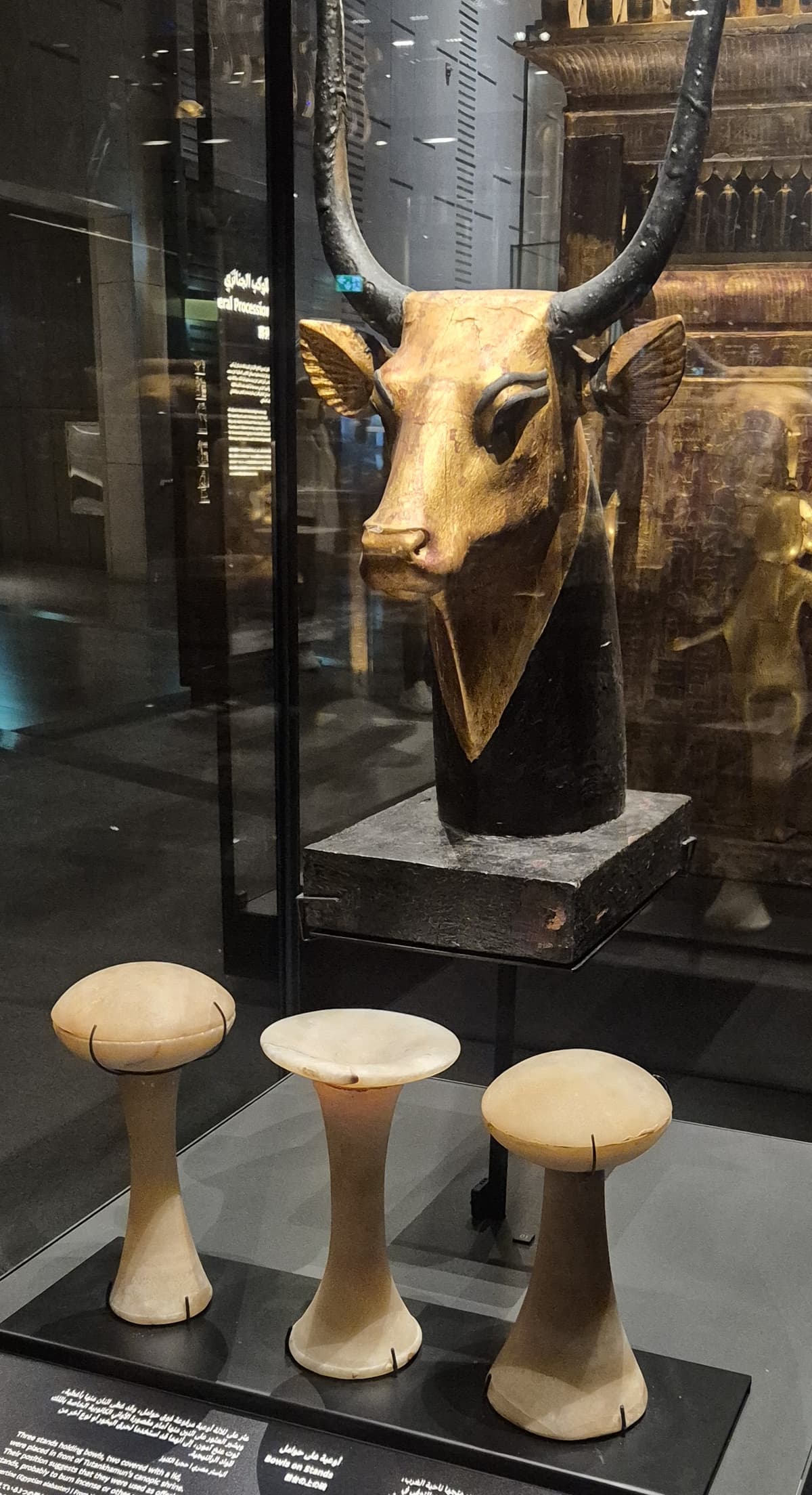
The objects displayed here were discovered among the remarkable treasures of the tomb of the young pharaoh Tutankhamun, who ruled Egypt during the 18th Dynasty of the New Kingdom around 1332 to 1323 BCE. Although smaller than many of the famous golden treasures of the tomb, these objects reveal important details about ancient Egyptian religious beliefs and burial rituals.
One of the most striking objects is the head of a cow, which is widely believed to represent the goddess Hathor. Hathor was one of the most beloved goddesses in ancient Egypt and was often depicted in the form of a cow or as a woman with cow horns. She was associated with motherhood, music, joy, and the nurturing aspects of the divine.
In Egyptian funerary belief, Hathor also played a special role as the goddess of the West, the direction where the sun sets and where the land of the dead was believed to lie. Because of this association, she was often described as welcoming the deceased into the afterlife. Scenes in tomb paintings frequently show Hathor emerging from the western mountains or from a thicket of papyrus to greet the soul of the deceased.
The cow head displayed here was found placed in front of the king’s canopic shrine. Its position suggests that the image of Hathor symbolically guided and protected the king on his journey into the next world. The object is made from a combination of materials including gold, bronze, wood, and glass, demonstrating the extraordinary craftsmanship used in royal funerary equipment.
Nearby are several bowls placed on stands, carved from travertine, a stone often called Egyptian alabaster. These vessels were likely used as offering stands. Archaeologists believe they may have held incense, aromatic resins, or other ritual substances used during the burial ceremony. The burning of incense was an important part of ancient Egyptian temple and funerary rituals. The fragrant smoke symbolized purification and served as an offering to the gods.
The placement of these bowls near the canopic shrine indicates that they formed part of the sacred rituals carried out during the king’s burial. These rituals were intended to ensure that the deceased ruler would be protected, purified, and spiritually prepared for eternal life.
Together these objects demonstrate how ancient Egyptian burial practices combined religious symbolism, ritual performance, and artistic craftsmanship. Even simple looking objects played meaningful roles in the elaborate ceremonies that accompanied the burial of a pharaoh. Through them we gain a deeper understanding of how the ancient Egyptians prepared their kings for immortality.The objects displayed here were discovered among the remarkable treasures of the tomb of the young pharaoh Tutankhamun, who ruled Egypt during the 18th Dynasty of the New Kingdom around 1332 to 1323 BCE. Although smaller than many of the famous golden treasures of the tomb, these objects reveal important details about ancient Egyptian religious beliefs and burial rituals.
One of the most striking objects is the head of a cow, which is widely believed to represent the goddess Hathor. Hathor was one of the most beloved goddesses in ancient Egypt and was often depicted in the form of a cow or as a woman with cow horns. She was associated with motherhood, music, joy, and the nurturing aspects of the divine.
In Egyptian funerary belief, Hathor also played a special role as the goddess of the West, the direction where the sun sets and where the land of the dead was believed to lie. Because of this association, she was often described as welcoming the deceased into the afterlife. Scenes in tomb paintings frequently show Hathor emerging from the west ... اكتشف المزيد مع البريميوم!
اكتشف القصة الكاملة لهذا الأثرقم بالترقية للبريميوم للوصول إلى الوصف الكامل، الأدلة الصوتية، والمحتوى الحصري لجميع القطع الأثرية.استمتع بالوصول الكامل إلى الأدلة الصوتية والوصف المفصل والمساعد الصوتي للجولات لأهم القطع الأثرية في المتحف الكبير بسعر 3.99 دولار