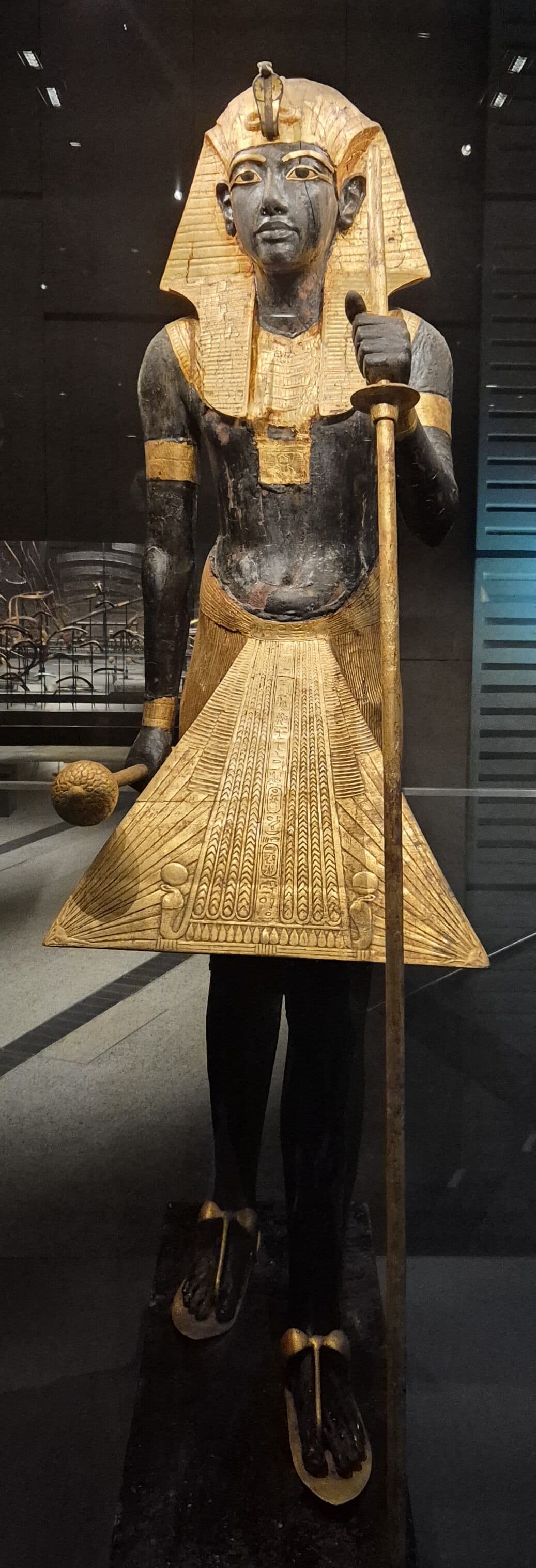
Guardian Statue with Nemes Headcloth & Guardian Statue with Khat Headdress
0:00 / 1:30
The Guardian Statues of Tutankhamun are among the most striking discoveries from the tomb of the young pharaoh Tutankhamun, who ruled Egypt during the 18th Dynasty of the New Kingdom around 1332 to 1323 BCE. These statues were discovered in 1922 by the British archaeologist Howard Carter inside the king’s tomb in the Valley of the Kings.
The statues were found standing at the sealed doorway leading to the burial chamber where the king’s sarcophagus rested. Positioned face to face, they acted as symbolic guardians protecting the sacred space of the tomb. Their placement created the impression that the king himself stood watch over his own eternal resting place.
Each statue represents the pharaoh in a protective and divine form. One statue wears the nemes headcloth, the striped royal headdress famously seen on many pharaohs including the image on Tutankhamun’s golden funerary mask. The nemes symbolized royal authority and the divine nature of kingship in ancient Egypt. The second statue wears the khat headdress, a simpler cloth headdress associated with royal and ceremonial contexts.
The statues are carved from wood and covered with a dark resin coating with gilded details. Their dark color had deep symbolic meaning in ancient Egyptian belief. Black represented fertility, regeneration, and rebirth. It also recalled the fertile black soil deposited by the annual flooding of the Nile River, which gave life to the land of Egypt. For the ancient Egyptians this color symbolized the promise of renewal and eternal life.
The inscriptions found on the statues refer to the king’s ka, the spiritual life force believed to live on after death. In Egyptian religion, protecting the ka was essential for the king’s journey into the afterlife. The statues therefore served both a ritual and magical function, guarding the entrance to the burial chamber and ensuring the king’s safe transition to eternity.
Each statue stands at life size and originally held ceremonial staffs or weapons that reinforced their protective role. Linen shawls were also draped over their shoulders when they were discovered, showing that the statues were treated almost like living royal figures during the burial ritual.
The discovery of Tutankhamun’s tomb remains one of the greatest archaeological events in history because it was found largely intact. While many royal tombs had been robbed in antiquity, Tutankhamun’s tomb contained thousands of objects that reveal extraordinary details about royal life, burial practices, and religious beliefs in ancient Egypt.
Today these guardian statues still stand as they did more than three thousand years ago. They continue their silent duty as protectors of the young king and as powerful symbols of ancient Egyptian beliefs about kingship, protection, and eternal life.The Guardian Statues of Tutankhamun are among the most striking discoveries from the tomb of the young pharaoh Tutankhamun, who ruled Egypt during the 18th Dynasty of the New Kingdom around 1332 to 1323 BCE. These statues were discovered in 1922 by the British archaeologist Howard Carter inside the king’s tomb in the Valley of the Kings.
The statues were found standing at the sealed doorway leading to the burial chamber where the king’s sarcophagus rested. Positioned face to face, they acted as symbolic guardians protecting the sacred space of the tomb. Their placement created the impression that the king himself stood watch over his own eternal resting place.
Each statue represents the pharaoh in a protective and divine form. One statue wears the nemes headcloth, the striped royal headdress famously seen on many pharaohs including the image on Tutankhamun’s golden funerary mask. The nemes symbolized royal authority and the divine nature of kingship in ancient Egypt. The second statue wears the khat headdress, a simpler cloth headdress associated with royal and ceremonial contexts.
The statues are carved f ... اكتشف المزيد مع البريميوم!
اكتشف القصة الكاملة لهذا الأثرقم بالترقية للبريميوم للوصول إلى الوصف الكامل، الأدلة الصوتية، والمحتوى الحصري لجميع القطع الأثرية.استمتع بالوصول الكامل إلى الأدلة الصوتية والوصف المفصل والمساعد الصوتي للجولات لأهم القطع الأثرية في المتحف الكبير بسعر 3.99 دولار