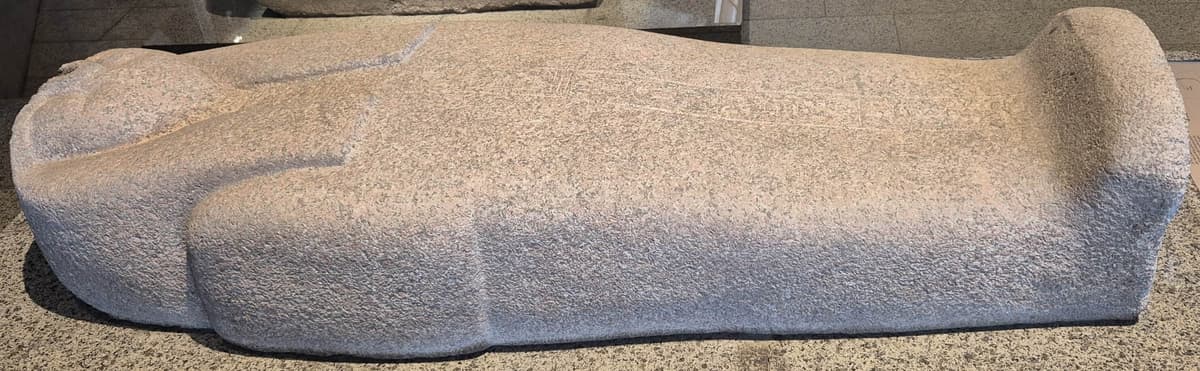
This granite lid belonged to King Harsiese I, a ruler whose legitimacy remains debated. Although he declared himself king in Thebes, it's uncertain whether his reign was widely recognized. Harsiese I ruled during a time of deep political fragmentation in Egypt—the Third Intermediate Period, specifically during Dynasty 22 (c. 865–860 BCE).
He is thought to have been a contemporary of King Osorkon II, who ruled from Tanis in the Nile Delta. This points to a divided Egypt, with power shared or contested between northern and southern cities. Despite this uncertain status, Harsiese I was buried with royal honors in the precinct of the Temple of Amun at Medinet Habu in Thebes—a sacred site traditionally reserved for prestigious burials.
The choice of burial location suggests an attempt to legitimize his kingship by associating with established dynastic traditions. During this period of unrest, temples offered safe havens for both the living and the dead. It was not uncommon for temple grounds to serve as burial sites for rulers and high elites.
This sarcophagus lid reflects the complex political reality of its time—where titles, alliances, and sanctuaries were all part of a ruler’s strategy for recognition and remembrance.This granite lid belonged to King Harsiese I, a ruler whose legitimacy remains debated. Although he declared himself king in Thebes, it's uncertain whether his reign was widely recognized. Harsiese I ruled during a time of deep political fragmentation in Egypt—the Third Intermediate Period, specifically during Dynasty 22 (c. 865–860 BCE).
He is thought to have been a contemporary of King Osorkon II, who ruled from Tanis in the Nile Delta. This points to a divided Egypt, with power shared o ... اكتشف المزيد مع البريميوم!
اكتشف القصة الكاملة لهذا الأثرقم بالترقية للبريميوم للوصول إلى الوصف الكامل، الأدلة الصوتية، والمحتوى الحصري لجميع القطع الأثرية.استمتع بالوصول الكامل إلى الأدلة الصوتية والوصف المفصل والمساعد الصوتي للجولات لأهم القطع الأثرية في المتحف الكبير بسعر 3.99 دولار